When most people think of a heavy metal band, the first image that comes to mind will almost invariably be of Lemmy Kilmister and the band Motorhead, a band that combined everything about the London underground music scene and stripped it to its bare essentials.
Alongside Iron Maiden and Deep Purple, Motorhead were one of the pillars of a new wave of British heavy metal that primarily emanated from London’s underground, and only a private tour can take you through the uniquely chaotic places and events that shaped one of the most gnarled foundations of the capital’s rock scene.
Here are some of the foundational, unusual and fascinating parts of London that shaped the legend of a band that did everything louder than everyone else.
Kensington Market
Whilst Motorhead had many members, the single constant was Ian Kilmister, known to the world by his nickname ‘Lemmy’, allegedly because he kept asking people to lend him money, and the story of Motorhead is in many respects his story.
He was born in Stoke-On-Trent, but hitchhiked his way to London in 1967 after his previous Manchester-based band, The Rockin’ Vickers, lacked enough ambition.
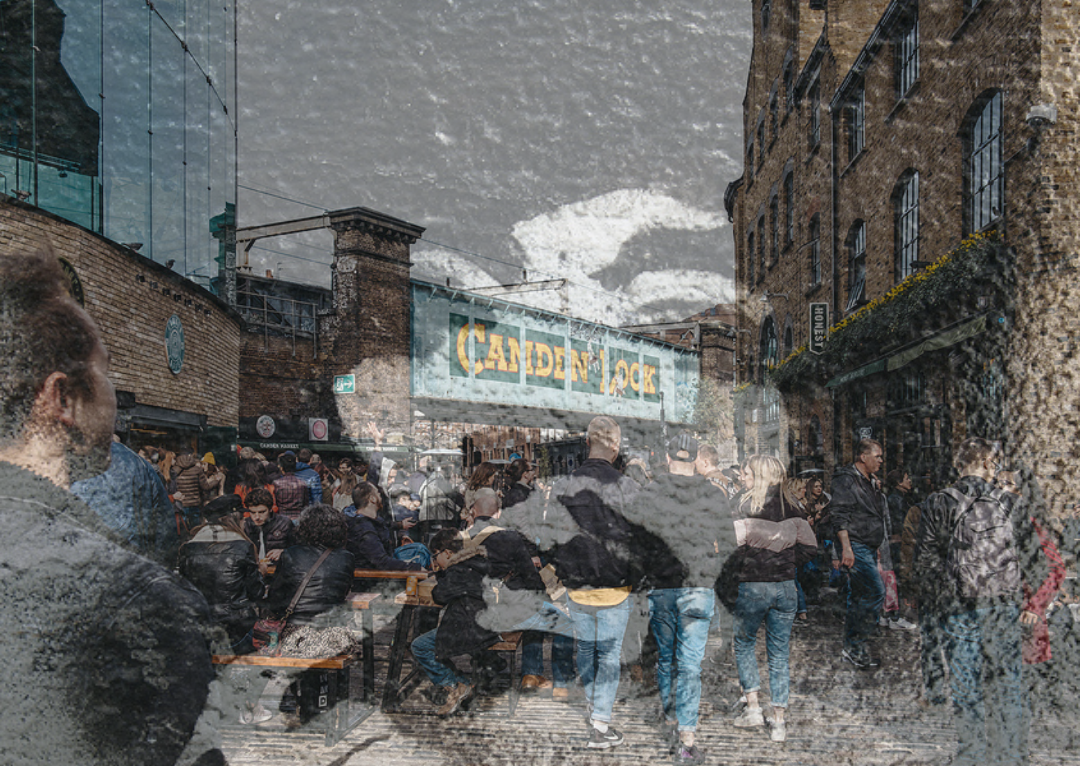
He wound up working as a roadie for Jimi Hendrix, but when he left for America, Lemmy ended up working around Kensington Market, then a haven for bohemian and hippie counterculture.
It was at this point that he had a chance meeting with Michael “DikMik” Davies, a member of the band Hawkwind, and following several nights of excess, he ended up being convinced to join the band as a bassist in 1971, despite having never played the instrument.
He would shape the band’s early sound and even sing the lead on Silver Machine, but following a string of erratic behaviour and an arrest on the Canadian border, the band kicked him out in 1975.
Marquee Club
One of the most important music venues in London, the Marquee Club was where Motorhead was truly formed, ironically just after the band’s supposed “farewell show”.
Motorhead formed in 1975, just after Lemmy had been kicked out of Hawkwind, and was named after the last song he wrote for the band.
However, after two years of limited success, living in squats and having been named the “best worst band in the world” by the New Musical Express, the band was ready to call it quits on April Fools’ Day 1977.
However, Lemmy happened to know Ted Carroll, the founder of independent record label Chiswick Records, and when he failed to get a mobile recording unit to the Marquee to record this final concert, he gave them the chance to record a single at Escape Studios.
That single became their eponymous debut album, recorded at Escape and finished at Olympic Studios, which managed to spend a single week in the UK Albums Chart.
Wessex Sound Studios
Formerly a church hall and later sold to a residential development company, Wessex Sound Studios was where Motorhead’s baffling breakthrough was recorded.
Following a year of chaos, the band found some stability, with a consistent lineup of Lemmy, Phil “Philthy Animal” Taylor (no relation to the darts player of the same name) and “Fast” Eddie Clarke.
This song turned out to be a cover of the rock and roll staple Louie Louie, which led to an appearance on the BBC show Top of the Pops that made it to number 68 on the UK Singles Chart.
This cover track and this studio saved the band once again, with Bronze Records extending their contract from a single song the founder described as “about the worst” he had ever heard to a six-year record deal that would carry the band through their golden age.
Barnet
After both Overkill and Bomber, Motorhead hit the big time with Ace of Spades, by far their most successful album, which peaked at number four on the album charts.
Whilst recorded in Rickmansworth, the famous cover photo of the band dressed as heavy metal cowboys on a sandy dune was not actually taken in the United States but on top of an industrial sand pit in Barnet on a day so miserable that the cover artist had to composite in a blue sky.
Hammersmith Odeon
Whilst ironically not the location where the number one hit live album No Sleep ‘til Hammersmith was recorded, it was a critical venue for the band.
The Hammersmith Odeon (now the Eventim Apollo) was where Motorhead had their first breakout as a live act supporting Blue Oyster Cult, but became a home away from home for the band, eventually releasing a live album there, Better Motorhead than Dead, in 2007.